When scientific concepts are hidden behind dense definitions and abstract terms, many young learners, including young girls, begin to feel that science is not meant for them. That is exactly why 14-year-old innovator Vaishnavi Renduchintala created Science Fables (SciFables), a youth-led educational platform dedicated to making complex science accessible, engaging, and deeply relatable.
By translating topics like buoyancy, blood circulation, and the human microbiome into 5-minute illustrated adventures, SciFables bridges the gap between imagination and science education. Driven by a belief that cost should never stand in the way of curiosity, SciFables provides free web reads, downloadable PDFs, and audio narration to ensure all families and educators have access to the learning tools.
I recently had the pleasure of interviewing Vaishnavi to learn more about the spark behind her project, how character-driven stories build early confidence in STEM, and her inspiring advice for other young people looking to bring their big ideas to life. Read on to explore our full conversation below.
Amanda: To start us off, what inspired you to create SciFables?
Vaishnavi: I’ve always loved science, but I noticed that many scientific ideas can feel difficult or intimidating when they are introduced through dense explanations, unfamiliar vocabulary, or abstract concepts. That made me think about how differently children respond to stories. Stories are familiar, memorable, and easier to connect with.
That idea became SciFables. SciFables lowers the entry barrier to STEM by transforming complex and abstract science concepts into relatable stories that children can understand and enjoy. My goal is to help children feel that science is something they can understand, explore, and be excited about.
Amanda: Your focus on making STEM feel relatable and approachable is so critical. Why did you decide to target the 8–12 age range specifically for these stories?
Vaishnavi: I chose ages 8–12 because children at this age are naturally curious and beginning to encounter more complex science concepts in school, but they still connect strongly with characters, stories, and illustrations.
I think this is an important stage for building confidence in STEM. If a child begins to think, “Science makes sense to me” instead of “Science is too difficult,” that can influence how willing they are to explore STEM later.
Amanda: SciFables translates topics like buoyancy, blood circulation, and the human microbiome into 5-minute illustrated stories. How do you select which topics to cover, and what is your process for breaking down complex concepts into kid-friendly narratives?
Vaishnavi: I usually start with either an important science concept children encounter in school or a question they might naturally ask, such as “Why can a huge ship float?” or “How does blood travel around the body?”
I first make sure I understand the science thoroughly. Then I identify the core idea a child really needs to understand and think about an everyday situation, mystery, or adventure that can make that idea relatable.
The goal is not simply to make the science shorter. It is to lower the entry barrier by turning something abstract into something a child can picture and connect with.
A recent example happened in Malawi. About 350 children at Dzaleka Refugee Camp learned about germination through the SciFables story The Seed That Slept Underground. After listening to the story and answering quiz questions, the children were asked to bring plastic bottles from home, and each child received a seed to plant and observe. I loved seeing the learning move from a story into something children could experience themselves.
Amanda: That global reach is incredible! Many of your stories feature young kids investigating mysteries. How does character-driven storytelling help kids connect with science differently than traditional textbooks?
Vaishnavi: Characters give children someone to discover the science with. Instead of immediately being presented with a definition, children first encounter a question or problem. They wonder what will happen next, follow the characters as they investigate, and gradually discover the science along with them. That makes science feel less like a subject they have to decode and more like something they can participate in. I think that helps lower the psychological barrier as well. Children will begin to see science as approachable rather than intimidating.
Amanda: SciFables provides free web reads and downloadable PDFs. Why was making these resources free and accessible so central to your mission?
Vaishnavi: If the goal is to lower the entry barrier to STEM, cost should not create another barrier. I wanted children, parents, teachers, and schools to be able to use SciFables regardless of their financial circumstances. That is why the platform is free and includes different ways to experience the stories through reading, audio narration, quizzes, and downloadable PDFs.
The experience in Dzaleka Refugee Camp made this especially meaningful to me. Seeing approximately 350 children in Malawi learning through a SciFables story showed me that something created in California can reach children thousands of miles away when access is kept open.
Amanda: You make a great point about lowering the entry barrier to STEM. Along those lines, I want to ask you about reaching girls with your work. How does SciFables empower young readers—especially girls—to see themselves as problem-solvers and scientists?
Vaishnavi: I intentionally include girls as curious characters who ask questions, investigate problems, make observations, and discover answers. I want girls reading the stories to see that curiosity and problem-solving are things they can own. Science is not only something done by scientists in laboratories. It begins with noticing something, asking why, and wanting to understand it.
As a young girl building SciFables myself, I also hope my journey communicates that you do not have to wait until adulthood to contribute to STEM. Young people can identify problems, create solutions, and make an impact now.
Amanda: That is so powerful, Vaishnavi. You are proving firsthand that leadership and innovation don't have an age requirement, and your journey is such an inspiring reminder of what happens when we give young people the platform to solve real problems. Speaking of that real-world impact, what has been the most rewarding response or feedback you’ve received from a reader, family, or teacher using SciFables?
Vaishnavi: One of the most rewarding moments happened recently at Dzaleka Refugee Camp in Malawi. The Art for Hope team used The Seed That Slept Underground, my SciFables story about germination, with approximately 350 children. The children were divided into groups of around 30, listened to the story, and answered questions from the accompanying quiz.
What made it especially meaningful was what happened next. The children were given homework to bring a plastic bottle, and each child will receive a seed to plant so they can observe germination themselves.
I received videos of the children participating, and seeing hundreds of children engaging with something I created was incredibly moving. It showed me exactly what I hoped SciFables could do: take a science idea that might initially seem abstract and turn it into something children understand, enjoy, and then explore in the real world.
Amanda: Wow—350 kids moving from listening to a story to planting their own seeds is incredible! It’s the ultimate validation of your mission: turning abstract ideas into tangible, real-world action.
To close us out, what advice would you give to other young innovators or writers who have an idea for an educational resource and want to launch their own project?
Vaishnavi: Start before everything feels perfect. SciFables did not begin with dozens of stories, quizzes, audio, or partnerships. It began with one idea and one story. I kept learning, improving, asking for feedback, and building from there.
I would also tell young people not to be afraid to reach out. Send the email. Ask the teacher. Contact the organization. Share your idea. Some people may not respond, but one response can open a completely unexpected door.
Most importantly, do not assume your age determines how much impact you can have. If you see a problem you care deeply about, start with what you can do now. Small ideas can grow much further than you imagine.
Learn More
SciFables regularly collaborates with nonprofits, schools, libraries, and community organizations. If you would like to bring SciFables to the children you serve, check out the links below.
- Explore SciFables: https://www.scifables.com/
- Learn About Partnering: https://www.scifables.com/get-involved#partner-with-us
- Contact: scifables2026@gmail.com
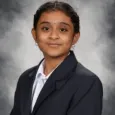
Vaishnavi Renduchintala
My name is Vaishnavi Renduchintala and I am the 14-year-old founder of Science Fables. I have always loved science and storytelling, so I decided to combine them into something fun for kids. That's how SciFables was born.
My goal is to help children discover amazing science concepts through exciting stories that spark curiosity and make learning feel like an enjoyable experience,
Amanda Sullivan
Senior Researcher, NGCP